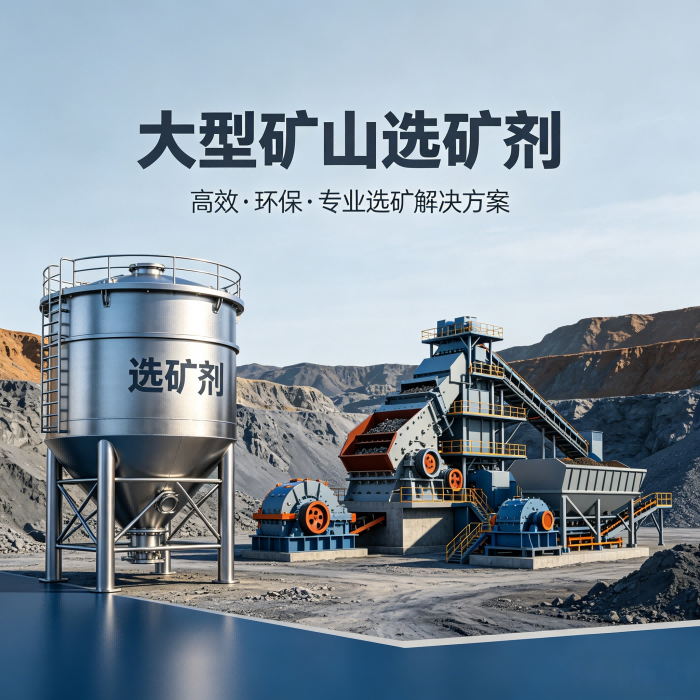
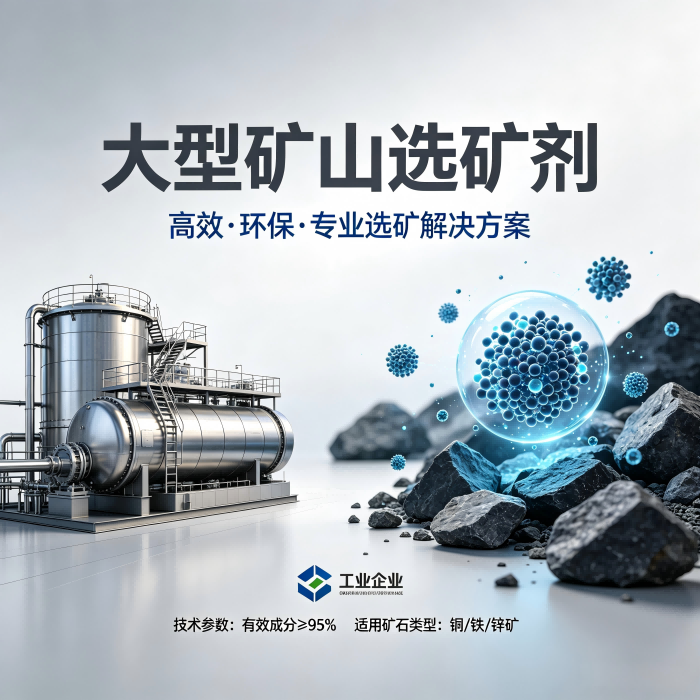
Gold has been a symbol of wealth since ancient times. However, from deeply buried ore to sparkling gold bars, a complex process of beneficiation and smelting is required in between. In this journey of turning stones into gold,mineral processing reagentsPlaying an indispensable role. They are like invisible 'chemical magicians', responsible for efficiently and accurately separating gold from large amounts of waste rock.
Today, we will comprehensively analyze the knowledge system of gold beneficiation process reagents from technical principles, reagent classification to industry trends.
The content of gold in ore is usually extremely low, with only a few grams or even a few tenths of a gram of gold per ton of ore. Taking China's gold mines as an example, the main focus is onLow grade ore and difficult to process oreMainly composed of complex ore components, gold is often enveloped by minerals such as pyrite and arsenopyrite-1If mineral enrichment is not carried out, direct smelting is not only costly, but also technically difficult to achieve.
The purpose of mineral processing is to separate gold from a large amount of gangue minerals through physical or chemical methods, forming high-grade gold concentrate and preparing for subsequent smelting processes-1。
At present, the mainstream precious metal beneficiation methods worldwide mainly includeFlotation method、Chemical leaching methodAnd a combination of two methods. The original methods such as reselection, magnetic separation, and mercury mixing have gradually been replaced due to outdated processes or serious pollution-1。
According to different beneficiation methods, gold beneficiation reagents can be divided intoflotation reagentandLeaching agentTwo major categories-1。
The flotation method utilizes the differences in physical and chemical properties of mineral surfaces to attach target minerals to bubbles by adding reagents, thereby achieving separation from waste rock. Flotation reagents mainly include three categories-1:
1. Collector
The function of the collector is to change the hydrophobicity of the mineral surface, allowing the mineral particles to adhere to the bubbles and float up. Simply put, it is like putting a hydrophobic coat on gold particles, allowing them to "grab" bubbles and fly up to the surface of the slurry.
Common collectors include yellow medicine (such as butyl yellow medicine, isobutyl yellow medicine), black medicine (such as butyl ammonium black medicine), etc. Research has shown that different collectors have varying abilities to capture pyrite, in the following order:Butyl ammonium black medicine>Butyl yellow medicine>Isobutyl yellow medicine>Ethyl yellow medicine-6In actual production, multiple collectors are often used together to obtain better collection effect and more stable foam layer-4。
2. Adjusters (including inhibitors, activators, pH adjusters)
The function of the adjusting agent is to optimize the flotation environment and help the collector to better function.
inhibitorUsed to suppress unwanted mineral flotation and improve concentrate grade. Common ones include lime, water glass, sodium hexametaphosphate, etc-4For example, in gold flotation, the inhibitory effect of quicklime on pyrite is significantly better than that of sodium hydroxide-6。
activatorUsed to enhance the adsorption capacity of the target mineral towards the collector, activating the suppressed mineral. Common activators includeCopper sulfate, ammonium saltwait-4Copper sulfate is also one of the key reagents for processing high arsenic, high carbon, and refractory gold ores-8。
PH adjusterThe acidity and alkalinity of the slurry have a significant impact on the flotation effect. Based on experience, gold flotation is more suitable in neutral media. Common adjusters include lime, sodium carbonate (soda), and caustic soda-4。
3. Foaming agent
The function of foaming agents is to generate stable and appropriately sized bubbles, providing a carrier for mineral particles to adhere to. Commonly used oils include 2 # oil, pine alcohol oil, ether alcohols, etc-8。
Practical CaseThe flotation system of a gold mine in Guizhou once had problems of poor mineralization of pulp and thin foam layer. By optimizing the pharmaceutical system and adoptingSodium carbonate+copper sulfate+new collectorThe combination scheme, with a slight decrease in concentrate yield, increased gold recovery by 1.79 percentage points, reduced tailings gold grade by 0.12g/t, and significantly improved economic benefits-7。
For low-grade gold ore or flotation tailings, leaching method is a more economical choice. The function of leaching agents is to dissolve gold from ore and recover it from the gold containing solution. Leaching agents can be divided into three categories-1:
1. Traditional cyanide reagent: Sodium cyanide
Cyanide process is currently the most mainstream mineral processing method, approaching globally90% 的选矿工艺使用氰化钠-1It uses an aqueous solution of alkali metal cyanide as a solvent to leach precious metals from gold and silver ores, and hasLow cost, high recovery rateIts characteristics are suitable for various types of gold mines such as vein gold, copper gold, etc-1。
However, sodium cyanide belongs toInorganic toxic substancesStrict regulations are imposed on production, storage, and transportation processes, and any leakage will cause devastating damage to the ecological environment. This has also sparked a research and development boom for environmentally friendly alternative drugs-1。
2. Environmentally friendly cyanide reagents: low toxicity leaching agents containing cyanide groups
This type of medication is a technological breakthrough based on the traditional cyanide method. The core principle is:Using organic compounds containing cyanide groups instead of inorganic compounds containing cyanide groupsDissolve gold and use molecular structure design to firmly lock the cyanide group, making it difficult for free cyanide ions to dissociate under alkaline conditions, thereby achieving low toxicity at the source-1-9。
Taking the industry benchmark product "Jinchan" environmentally friendly beneficiation agent as an example, its main components include carbonized sodium cyanurate, alkaline polymeric iron, etc. The cyanide group in carbonized sodium cyanuratecovalent bondConnection method, due to steric hindrance effect, does not dissociate free cyanide ions under conventional conditions, but can exhibit chelating properties similar to cyanide during gold leaching, efficiently dissolving gold-9。
The advantages of this type of product are:
Low toxicity and environmental protectionBelonging to ordinary goods transportation, no toxic approval procedures are required
Process compatibilityCan directly replace sodium cyanide without the need to modify existing equipment and processes
High leaching rateFor different types of ores, the leaching rate should not be lower than that of sodium cyanide
3. Non cyanide agents: the future direction
Non cyanide agents include thiourea, thiosulfates, halogen compounds, etc. They are completely cyanide free and have the advantages of being non-toxic and pollution-free. They also have good selectivity for difficult to treat gold ores containing carbon and copper-1。
However, there are still technical bottlenecks for non cyanide agents at present:
thioureaIt needs to be carried out in an acidic medium, with high requirements for equipment corrosion resistance, and is prone to oxidation and decomposition, resulting in a large consumption of chemicals
thiosulfatePoor stability, prone to oxidation and decomposition in ammonia solution, and high consumption of chemicals
Halogen compoundStrong gold dissolution ability and fast speed, but harsh reaction conditions (high temperature and high acidity), high equipment requirements-1
In practical production, flotation and leaching are often not an either or choice, but are combined and used based on the characteristics of the ore.
Yixuan Gold MineA single flotation can obtain ideal indicators. For example, a micro disseminated gold mine in Gansu Province can effectively recover gold through a single flotation process, combined with reagents such as sodium carbonate, copper sulfate, and butyl xanthate-10。
refractory gold oreOften requires a combined process of flotation and leaching. Firstly, gold sulfide is enriched through flotation, and then the gold concentrate is leached, which not only improves the recovery rate but also reduces the consumption of leaching reagents.
Low grade oxidized oreDirectly using heap leaching process, spraying leaching agents on the ore heap, collecting gold containing solution for recovery. The advantages of environmentally friendly leaching agents are particularly evident in such scenarios.
The gold ore dressing and pharmaceutical industry is undergoing a profound green transformation.
policy-drivenThe National Development and Reform Commission's "Guiding Catalogue for Industrial Structure Adjustment (2024 Edition)" lists "efficient, green, low-carbon mining and beneficiation technology (pharmaceuticals)" as an encouraged industry; The "Green Mining Construction Standards for the Gold Industry" issued by the Ministry of Natural Resources clearly require that "environmentally friendly flotation and gold extraction reagents should be used for production"-2。
market spaceIn 2023, the global market size of precious metal beneficiation reagents will reach 57.596 billion yuan, but the proportion of environmentally friendly products is only 8.02%. It is expected that by 2028, this proportion will increase to 14.45%, corresponding to a market size of nearly 9 billion yuan-2The alternative space is extremely vast.
technology frontierLeading enterprises in the industry are deploying cutting-edge technologies such as microbial leaching of gold and microbial cyanide removal, aiming to solve the problems that restrict the development of the industry, such as difficult to treat gold extraction from gold mines and pollution from mineral processing wastewater-9。
For gold mining enterprises, choosing suitable beneficiation agents is crucial. It is recommended to follow the following principles:
Mineral characteristics firstDetailed process mineralogical research must be conducted on the ore to clarify the occurrence state, embedded particle size, associated minerals, etc. of gold, which is the cornerstone of selecting the reagent scheme.
Due to the suitability of mining for experimentationThe properties of ores in different mining areas vary greatly, and the performance of the same reagent may vary greatly in different mining areas. Suggest entrusting professional institutions to carry outSmall scale and pilot scale trialsDetermine the optimal medication system.
Balancing environmental protection and efficiencyAgainst the backdrop of increasingly strict environmental policies, the early deployment of environmentally friendly chemicals is not only a compliance requirement, but also a rational choice to reduce comprehensive operating costs (saving costs such as security, detoxification, and tailings treatment).
Supplier service capabilityExcellent pharmaceutical suppliers should be able to provide full process technical services from mineral sample testing, formula customization to on-site debugging, rather than just selling products.
The evolution history of gold beneficiation reagents, from flotation to leaching, from traditional cyanide to environmentally friendly reagents, is also a microcosm of the transformation of the gold industry from "high pollution, high energy consumption" to "green, efficient, and sustainable". Understanding these 'chemical codes' not only helps mining enterprises optimize production indicators, but also provides insights into the development direction of the entire industry.
When green becomes the background color of mining, the technological innovation of mineral processing agents is injecting new era connotations into the ancient technique of "turning stone into gold".
 中文
中文 fra
fra spa
spa it
it alb
alb en
en de
de nl
nl ru
ru bel
bel jp
jp cht
cht kor
kor