In the mining field, there are such unknown "heroes" - they are not roaring crushers or huge flotation cells, but in the form of solutions, powders or lotion, accurately involved in every key link of mineral processing. They aremineral processing reagentsIf ore is a gift from the earth, then mineral processing agents are the "chemical key" that unlocks this gift. This article will unveil the mystery of mineral processing reagents in a simple and understandable way.
mineral processing reagentsIt refers to the chemical reagents added during mineral processing to separate useful minerals from gangue (waste rock). They change the physical or chemical properties of minerals by selectively interacting with the mineral surface, thereby achieving the enrichment of target minerals.
Simply put, ore contains both the useful minerals we want (such as gold, copper, iron) and a large amount of waste rock. The function of mineral processing reagents is toForming cliques——Bring useful minerals together and keep waste rocks in place to achieve separation.
According to their different functions, mineral processing agents are mainly divided into three categories:
Collector is the "protagonist" in mineral processing reagents. They can selectively adsorb on useful mineral surfaces, causing mineral particles to change from hydrophilic to hydrophobic (like being coated with a layer of oil). In this way, during the flotation process, hydrophobic minerals can adhere to bubbles and float to the surface of the slurry to be scraped away, while hydrophilic gangue remains in the slurry.
Common collectors:
xanthateThe most commonly used sulfide mineral collector, in the form of a yellow powder
Black medicineBetter selectivity than yellow medicine, suitable for ores containing copper, lead, and zinc
Thiamine esterEfficient and environmentally friendly, commonly used in complex polymetallic mines
The function of foaming agent is to help air form stable and small bubbles in the slurry. These bubbles are like an 'elevator', lifting useful minerals with attached collectors onto the surface of the slurry.
Common foaming agents:
Pine alcohol oil (No.2 oil): Traditional foaming agent, low cost, stable foam
MIBC: Rapid foaming, crisp foam, easy defoaming
Polyethylene glycol ethersNew environmentally friendly foaming agent with low dosage and high efficiency
Adjusters do not directly participate in mineral separation, but rather regulate the slurry environment (pH, ion composition, etc.) or inhibit/activate certain minerals, allowing collectors and foaming agents to function better.
Common adjusters:
PH adjusterLime (alkali adjustment), sulfuric acid (acid adjustment)
inhibitorInhibition of unwanted mineral flotation, such as lime inhibiting pyrite
activatorActivate difficult to float minerals, such as copper sulfate activating sphalerite
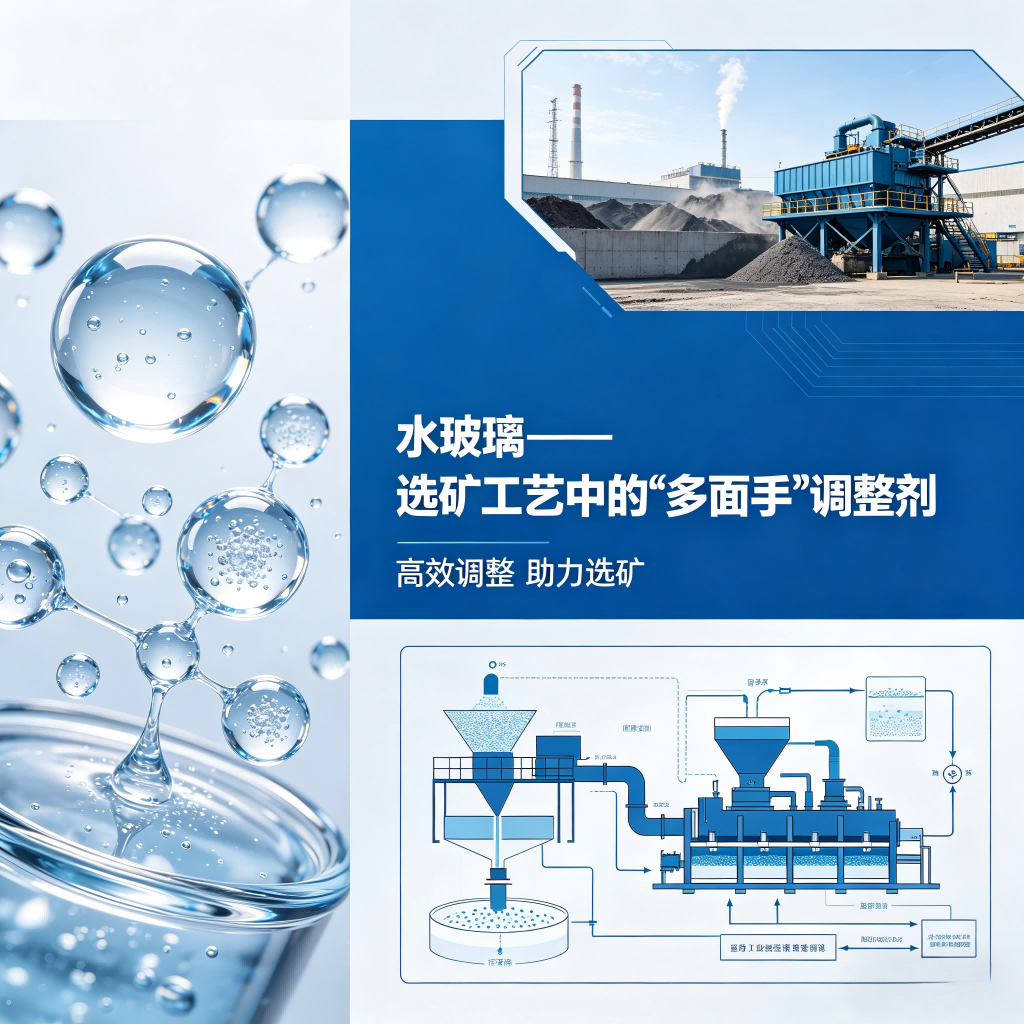
dispersantPrevent the accumulation of fine mud, such as water glass
Gold beneficiation has its unique characteristics, therefore there is a class of reagents specifically designed for gold extraction——Gold extraction agent。
Sodium cyanide is the most classic gold extraction agent, which can react with gold under alkaline aerobic conditions to form soluble gold cyanide complexes, thereby achieving the separation of cash and ore.
chemical reaction:4Au + 8NaCN + O₂ + 2H₂O → 4Na[Au(CN)₂] + 4NaOH
Cyanation method has high efficiency and low cost, but sodium cyanidehighly toxicIt poses a huge threat to the environment and safety. Therefore, the industry has been searching for more environmentally friendly alternatives.
In recent years, low toxicity and non-toxic environmentally friendly gold extractants have rapidly developed, mainly including the following categories:
| type | representative product | feature | Applicable ore |
|---|---|---|---|
| thiosulfate | Sodium/ammonium thiosulfate | Low toxicity, insensitive to copper | High copper gold mine |
| thiourea | thiourea | Quick leaching, effective for carbonaceous minerals | Carbon and arsenic containing gold ore |
| Glycine | amino acid salt | Completely non-toxic and environmentally friendly | Oxidized ore and environmentally sensitive areas |
| halogen | Sodium bromide/potassium iodide | Strong oxidizing property, high leaching rate | refractory gold ore |
withflotationFor example, the "collaborative operation" of mineral processing agents can be understood as follows:
grindingThe ore is ground into fine powder, and useful minerals and gangue are initially dissociated.
slurry mixingMixing mineral powder with water to form a slurry, adding an adjusting agent to adjust pH and suppress gangue.
dosing: Join in sequencecollector(Dress useful minerals in oil)foaming agent(Prepare a 'bubble elevator').
Inflatable flotationAir is injected into the slurry, causing bubbles to rise. Hydrophobic useful minerals attach to bubbles and float to the surface to form a foam layer; Hydrophilic gangue remains at the bottom of the slurry.
Product Collection: The foam product (concentrate) is scraped out and the underflow (tailings) is discharged.
The entire process may seem simple, but the type, dosage, order of addition, and slurry conditions of the reagents need to be precisely controlled in order to achieve the best separation effect.
Mineral processing reagents are not "the more expensive, the better", nor "the newer, the better". The key is toPrescribe the right medicine。
mineral compositionWhat are the main metallic minerals? What is a vein stone?
Embedding particle sizeIs the useful mineral coarse or fine? Is it wrapped?
Harmful elementsDoes it contain interfering elements such as carbon, arsenic, copper, etc?
water qualityHard water, soft water, and salt content can affect the effectiveness of the medication
temperatureLow temperature will reduce the activity of the drug
equipmentFloatation machine type, aeration rate, etc
The most reliable method islaboratory test——Take representative ore samples and compare the recovery rate, concentrate grade, and reagent consumption of different reagents under simulated production conditions to select the optimal solution.
In today's increasingly strict environmental regulations, priority should be given to choosing low toxicity, biodegradable, and easy to operate environmentally friendly chemicals. This not only reduces environmental risks, but also enhances the corporate image and obtains the "Green Mine" certification.
Although mineral processing agents are efficient, many varieties (such as cyanide, yellow medicine, heavy metal salts) have certain toxicity or irritation. Attention must be paid when using:
strict management: Dedicated person in charge, double person double lock, establish ledger
protective measuresWear gloves, goggles, gas masks, etc
emergency preparednessOn site equipped with flushing equipment, detoxifying agents, and emergency supplies for leakage
tailings treatmentTailings containing chemicals must be discharged in compliance with standards or stored harmlessly
In recent years,Green beneficiation reagentsBecoming the mainstream trend in the industry, major enterprises are developing and promoting non-toxic, biodegradable, and pollution-free alternative products, promoting the transformation of mining towards sustainable development.
Biological beneficiationUsing microorganisms or their metabolites to extract metals, completely eliminating chemical agents.
NanopharmaceuticalsNano scale collectors and immersion aids, with less usage and better results.
Intelligent dosingAn automatic dosing system based on online analysis and AI algorithms, achieving precise control.
closed-loop cycleChemical recycling and regeneration technology to achieve near zero discharge of wastewater.
Although mineral processing agents are small, they are the soul of mineral processing. Every innovation in mineral processing agents, from traditional yellow medicine and cyanide to modern environmentally friendly gold extractants and biologics, is driving the development of mining towards higher efficiency, cleaner, and more sustainable directions.
For mining professionals, understanding the basic knowledge of mineral processing agents, mastering selection and application skills, is essential
 中文
中文 fra
fra spa
spa it
it alb
alb en
en de
de nl
nl ru
ru bel
bel jp
jp cht
cht kor
kor