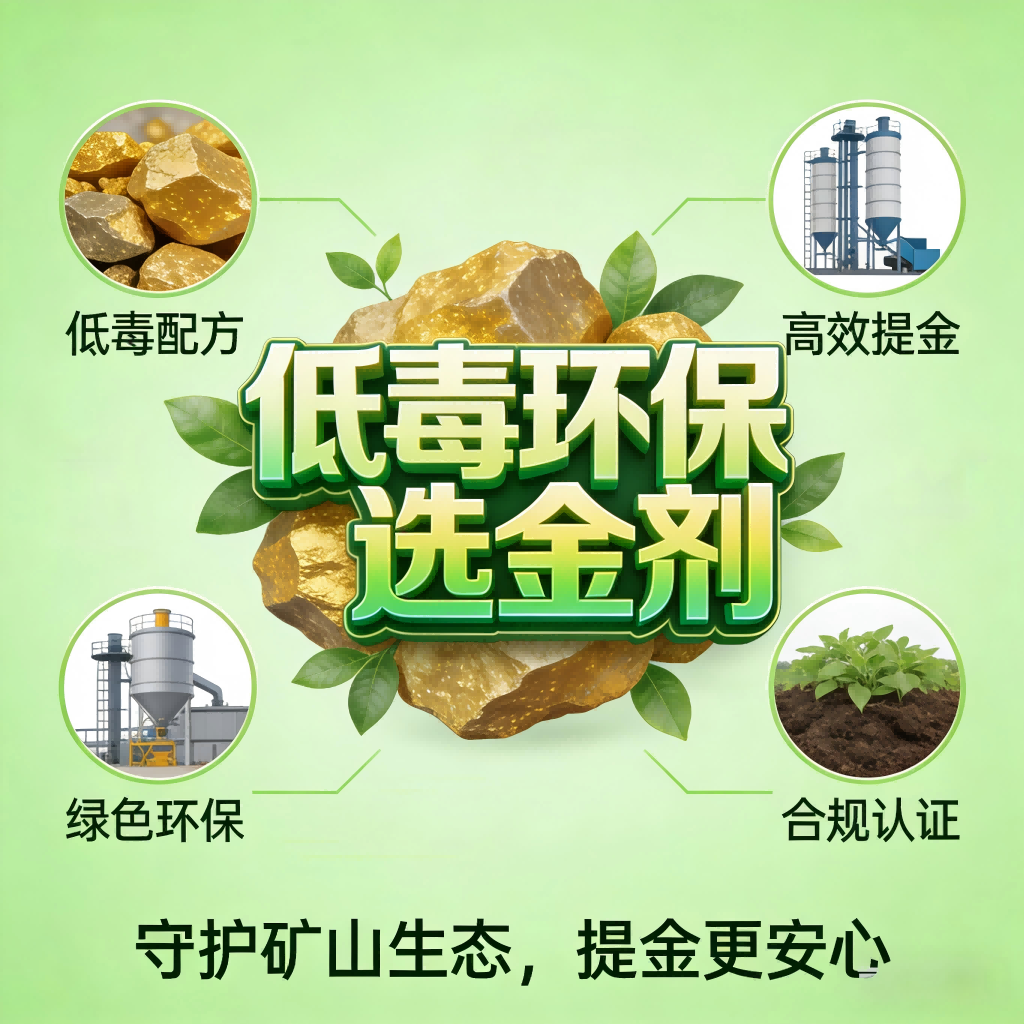
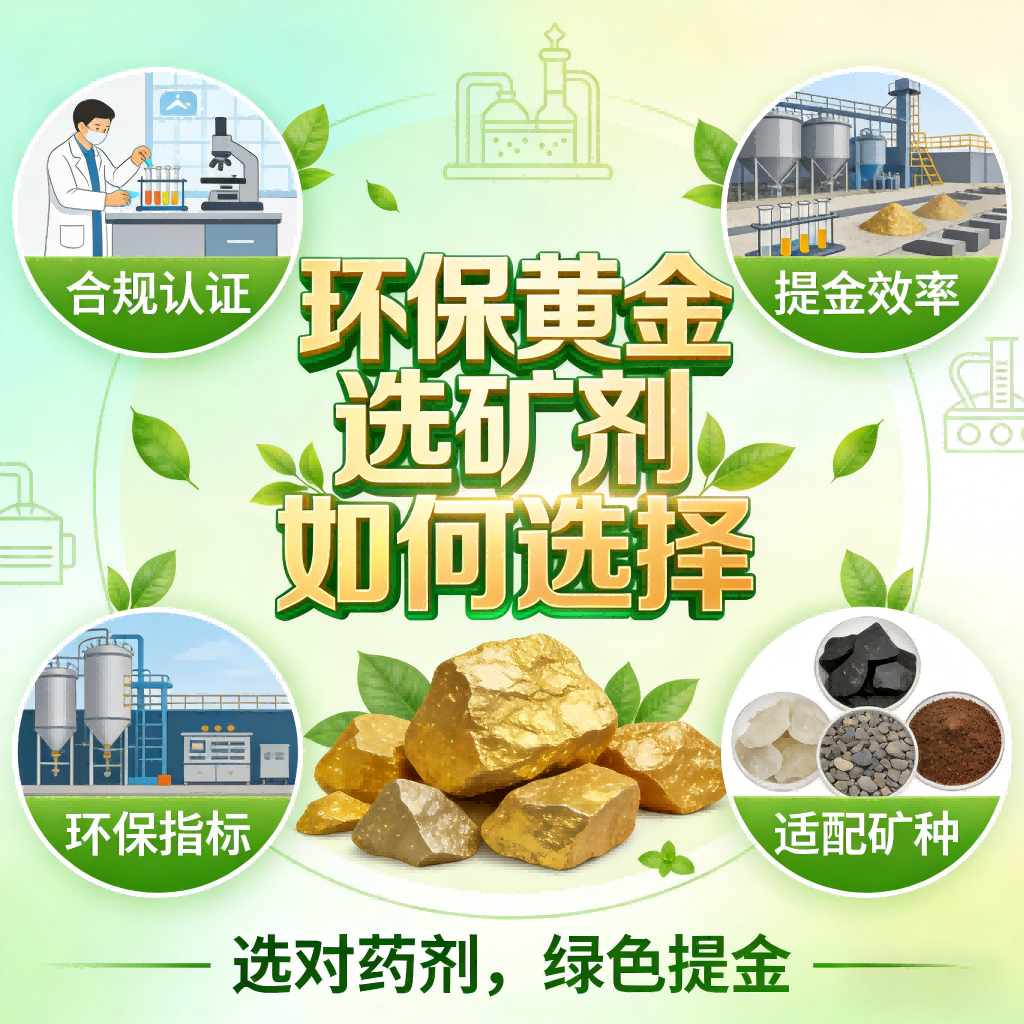
In the grand narrative of gold mining, the crushing, grinding, and flotation of ore form a spectacular physical prologue, while the true core of alchemy is often hidden in colorless or slightly turbid chemical solutions——Gold extracting potionAlthough they may not be prominent, they directly determine the recovery rate of gold, the economic benefits of production, and the ultimate responsibility of mines to the environment. The development history of a gold enhancing potion is a history of technological evolution in which humans constantly compete and innovate between pursuing wealth efficiency and ecological balance.
Since the emergence of cyanide method in the late 19th century,Sodium cyanide (NaCN) 便以其卓越的效能,确立了长达一个多世纪的行业统治地位。
Its core mechanism of action can be considered a classicIn an alkaline solution filled with oxygen, cyanide ions (CN ⁻) react with extremely fine gold particles to form a stable and water-soluble dicyanide alloy complex [Au (CN) ₂ ⁻], thereby "transporting" solid gold to the liquid phase for subsequent recovery through activated carbon adsorption or zinc powder displacement. This system has high efficiency, relatively controllable costs, and extremely mature processes, and is still the technical pillar for most of the world's gold production to this day.
However, under its "king" aura, it is unavoidableFatal Achilles' heel - high toxicityAny negligence in cyanide management, use, and tailings disposal can cause catastrophic and persistent pollution to water bodies, soil, and the food chain. In addition, it is powerless against certain special types of ores, such as "refractory gold mines" containing "gold robbing" activated carbon, gold tightly encapsulated by sulfides, or rich in interfering elements such as copper and arsenic. The increasingly stringent environmental regulations and pressure from public opinion have forced the industry to seek safer and more universal "green keys".
To solve the dual problem of efficiency and environmental protection, scientists and engineers have opened up multiple technological paths, giving birth to a new generation of environmentally friendly gold extraction agents. Their goals are consistent:Realize environmental friendliness while maintaining or even improving extraction efficiency。
1. Thiourea method: a fast "thief" of acidic systems
Thiourea can form stable cationic complexes with gold ions under acidic and oxidizing conditions, such as Au (CS (NH ₂) ₂ ⁺). Its reaction speed is extremely fast, it has unique advantages over certain copper and carbon containing ores, and it has low toxicity and is easy to degrade. However, its high consumption of chemicals and strong corrosiveness to equipment in acidic environments limit its large-scale industrial application.
2. Thiosulfate method: mild "ammonia solvent"
In an ammonia solution, thiosulfate can form stable anionic complexes with gold [Au (S ₂ O ∝) ₂³ ⁻].Its biggest advantage is that it is almost non-toxicAnd it has a high tolerance for copper in ores, making it very suitable for processing high copper gold mines. However, its complex pharmaceutical system (requiring ammonia and copper ion catalysis), difficult stability control, and high cost are the focus of technological optimization.
3. Halide method (such as chlorination method): a new generation of ancient techniques
Using chlorine gas or hypochlorite to oxidize and dissolve gold in an acidic environment, forming chloroauric acid ions [AuCl ₄⁻]. This method has a fast leaching rate, but the strong corrosiveness and irritability of chlorine gas, as well as the high requirements for equipment, make its application scenarios specific. It is often used in combination with pre-treatment processes such as biological oxidation or pressure oxidation.
4. New organic green solvents and synergistic agents
This is currently the most active area of research and development. Including various molecular designsSpecial organic chelating agents, polysulfides, amino acid derivativesWait. Their mechanism of action is more sophisticated: some are like "smart keys", with super selectivity towards gold ions, able to accurately bind and ignore impurities; Some are like "minimally invasive surgical knives" that can gently open the package of sulfides; Some are used as "enhancers" in combination with traditional cyanide in small amounts, significantly improving leaching rates and reducing total cyanide usage.
There is no universal medicine that is universally applicable. The core wisdom of modern gold extraction technology lies inMineral genes determine the formula of pharmaceuticals。
Conventional oxidized oreThe mature and stable cyanide method is still the economic first choice, but it can be reduced and increased in efficiency by adding environmentally friendly additives.
Complex sulfide ores with high copper and arsenic contentThe thiosulfate method or special selective chelating agents exhibit unique advantages.
Carbonaceous gold deposits containing "robbing gold"A specialized pretreatment agent or combination of agents that can preferentially passivate activated carbon is required.
Fine grained encapsulated refractory gold oreOften, a combination of "pretreatment (such as biological oxidation, calcination)+adaptive leaching" is required, in which case halide method or enhanced cyanide system may be more effective.
The selection of reagents has become a comprehensive strategic decision involving mineralogy, chemistry, metallurgical engineering, and economics.
The future of gold mining reagents is evolving in three clear directions:
1. Molecular level customization and artificial intelligence design
With the help of quantum chemistry calculations and artificial intelligence simulations, scientists can design "out of thin air" in the laboratory for specific mine ore compositionsCustomized molecular drugsTo achieve the optimal solution of efficiency and environmental attributes.
2. Deep integration of bio metallurgical technology
The ultimate environmentally friendly solution is to use specific microorganisms (such as ferrous sulfide bacteria) or their metabolites to oxidize pre treated ores or directly leach gold. In the future, the combination of "biological enzyme catalysts" and green chemical agents will usher in a new era of bio chemical synergistic gold extraction.
3. Closed loop cycle and zero emission process
Future pharmaceutical systems will place greater emphasis onSelf recycling and waste minimizationThrough advanced solution chemistry management and recovery technology, chemicals and valuable resources (such as water and other valuable metals) are maximally circulated in the system, ultimately achieving near zero toxicity of tailings and efficient reuse of water resources.
The evolution of gold mining reagents, from the "efficient but high-risk" use of cyanide to the "safe and intelligent" use of diversified green agents, reflects the profound transformation of the entire mining industry from extensive extraction to refined and sustainable operation. Choosing which medication to use is not only a technical issue, but also a declaration of environmental responsibility, community relations, and long-term value by the enterprise. Under the main theme of green development, the "chemical key" that unlocks underground treasures will become increasingly clean and intelligent, ultimately leading the mining industry towards a golden future of harmonious coexistence with the earth's ecology.
 中文
中文 fra
fra spa
spa it
it alb
alb en
en de
de nl
nl ru
ru bel
bel jp
jp cht
cht kor
kor